
When Citrus is Not a Citrus
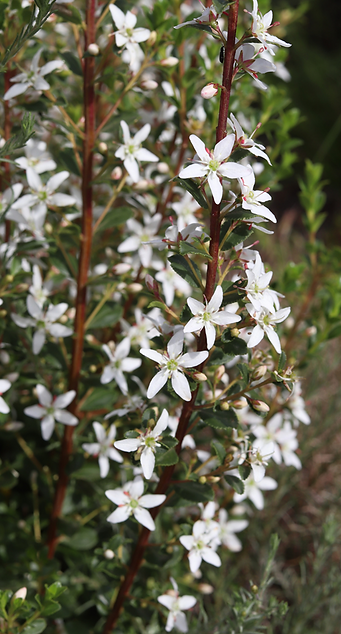
Exploring Agathosma betulina, the Jewel of South African Indigenous Plants
The Family
The genus Agathosma derives its name from the Greek words agathos (good) and osme (fragrance), a nod to the plant's distinctive aromatic qualities. The leaves and fruit are dotted with oil glands that release a pleasant fragrance when crushed. While this characteristic is typically associated with citrus plants, it is subtly present in Agathosma—commonly known as buchu—revealed through the tiny, translucent (pellucid) glands visible on its leaves.

This shared trait forms the botanical bridge that places buchu within the Rutaceae family—home to the citrus species we know so well. However, buchu is no ordinary member of this family. It’s a uniquely South African treasure, thriving in one of the world’s six floral kingdoms: the Cape Floral Region. Here, amidst the fine-leaved vegetation known as fynbos (from the old Dutch for “fine bush”), buchu stands as one of the indigenous jewels of this diverse ecosystem.
The Therapeutic Effect
Over 120 major chemical compounds have been identified in Agathosma betulina, including volatile oils, flavonoids, and alkaloids—each contributing to its complex pharmacological profile.

The method of preparation significantly influences the plant’s therapeutic effects.
For instance:
Buchu tea, made from an infusion of dried leaves, offers a different benefit than
Buchu powder, blended with oils for topical use, or
Boegoe brandewyn, a traditional tincture made by steeping fresh leaves in alcohol.
This diversity in applications emphasize the importance of consulting a professional phytotherapy practitioner when using buchu for medicinal purposes—particularly at higher doses.
From a pharmacological perspective, its antibacterial properties are largely attributed to diosphenol, while its diuretic effect is likely enhanced by flavonoids. Additionally, its mucilaginous components help to soothe and protect mucous membranes.
At the heart of its medicinal potential lies synergy—a foundational principle of phytotherapy. Rather than isolating single active ingredients, the combined effect of the whole plant extract offers greater efficacy and improved safety. This holistic approach respects the complexity of nature and enhances therapeutic outcomes.
The “Abalone” of the Land
Buchu has held significance for centuries among the Khoi and San peoples of Southern Africa, who recognized its potent properties long before it caught the attention of the wider world. As early as the 1600s, its value was noted in trade and writing:
“Some species are common in the Cape, one, however, to be found somewhere near the gold river, is so precious that one thimble of the powder is paid for with a lamb.”
– Sparrman et al., 1784 (referring to Agathosma betulina, which grows at high altitudes)
By the 18th and 19th centuries, knowledge of buchu had spread to Europe and the United States. In the U.S., it became a popular natural remedy for urinary tract infections—a use that continued until the rise of modern antibiotics.

In 1821, Agathosma betulina earned the distinction of being the first plant from the Cape Floral Kingdom to be listed in the British Pharmacopoeia, a key publication for pharmaceutical quality and public health standards.
Today, the Buchu Association plays a vital role in safeguarding this indigenous plant. Their mission is to nurture a sustainable, resilient, and inclusive buchu industry, rooted in environmental stewardship and focused on unlocking global market opportunities that benefit all stakeholders. Their work ensures the long-term conservation of the natural biodiversity on which buchu depends.
The Future
Although Agathosma betulina belongs to the citrus family, it stands apart with its unique fragrance, phytochemistry, and traditional applications.
Despite limited success in replicating traditional claims through double-blind, placebo-controlled trials, the door remains open for future research—both scientific and clinical. There is a growing recognition of the need to bridge the gap between indigenous knowledge systems and contemporary biomedical frameworks.
What remains certain is that Agathosma betulina has stood the test of time in the “laboratory of life.” Its enduring value, cultural significance, and therapeutic promise affirm its status as a truly “Proudly South African” botanical and medicinal jewel.
Your Wellness Journey starts here

Disclaimer
This blog is intended as an informational guide. The information and any remedies described herein are meant to supplement and not be a substitute for professional medical care or treatment. They should not be used to treat a serious ailment without prior consultation with a qualified health care professional.


Comments